Ibrahim Memorial Hospital Laboratory Technician performs routine technical tasks and experiments in laboratories to support scientific investigations.
Our laboratory covers a wide range of functions and is concerned with the diagnosis, treatment, and prevention of disease.
These include the blood bank, clinical chemistry, hematology, and serology, and microbiology.The Head of Department Vivian
and her team are skilled and experienced in the laboratory testing of all forms and are also available for testing 24 hrs every day.
Chemistry
High-grade facilities have been set up by the hospital management to ensure that all kinds of chemistry tests can be performed in the hospital’s
laboratory. The hospital can conduct all chemistry tests like Aldolase, Alpha Feto Protein, Bence Jones Protein, Creatine Kinase – MB, D – Dimer,
24h Urine Amylase, 24h Urine Calcium, and so on.
Hematology
Hematology involves the study of the blood, how blood can affect overall health or disease. Hematology tests include tests on the blood, blood proteins,
and blood-producing organs.
These tests can evaluate a variety of blood conditions including infection, anaemia, inflammation, hemophilia, blood-clotting disorders, leukaemia,
and the body’s response to chemotherapy treatments. Tests may be routine and regular, or they may be called upon to diagnose serious conditions in urgent situations.
In many cases, the results of a blood test can give an accurate assessment of body conditions and how internal or external influences may affect a patient’s health.
Microbiology
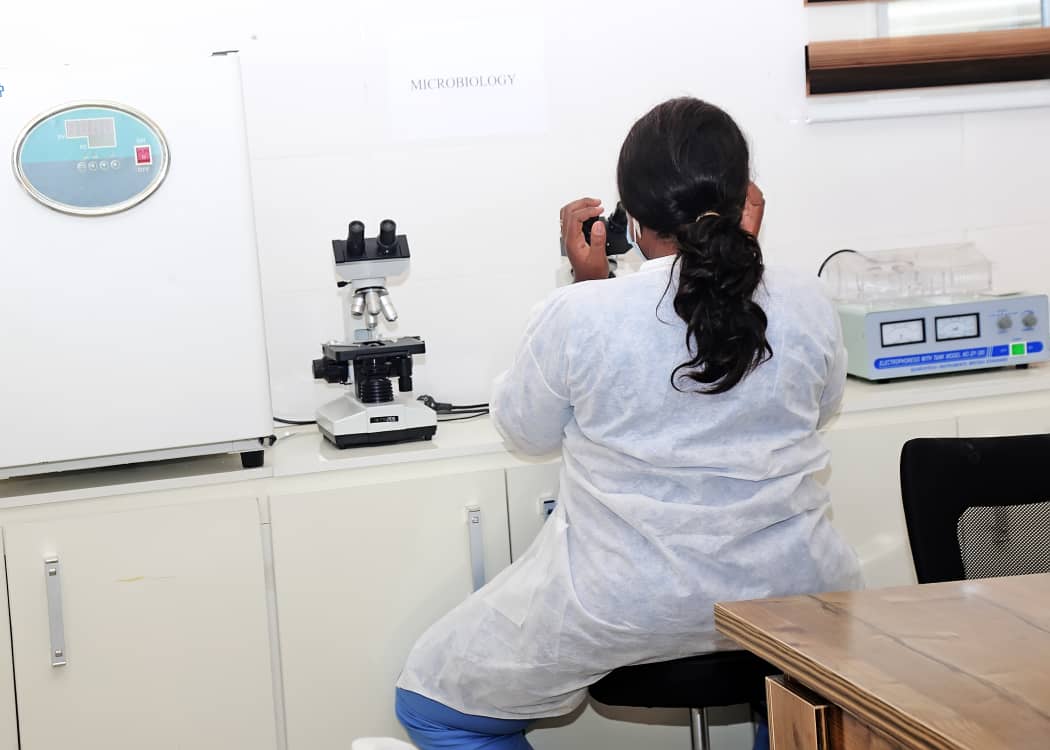
The microbiological analysis covers the use of biological, biochemical, or chemical methods for the detection, identification, or enumeration of microorganisms.
It is often applied to disease-causing and spoilage microorganisms. Our laboratory possesses facilities which could be used to do these analysis for medical diagnosis.
Serology
Serological test also called serology test or antibody test is any of several laboratory procedures carried out on a sample of blood serum (the clear liquid that separates from the blood when it is allowed to clot)
for the purpose of detecting antibodies or antibody-like substances that appear specifically in association with certain diseases. There are different types of serological tests—for example, flocculation tests,
neutralization tests, hemagglutinin-inhibition tests, enzyme-linked immunosorbent assays (ELISAs), and chemiluminescence immunoassays.